The Kodak / Graflex Autographic Feature
The
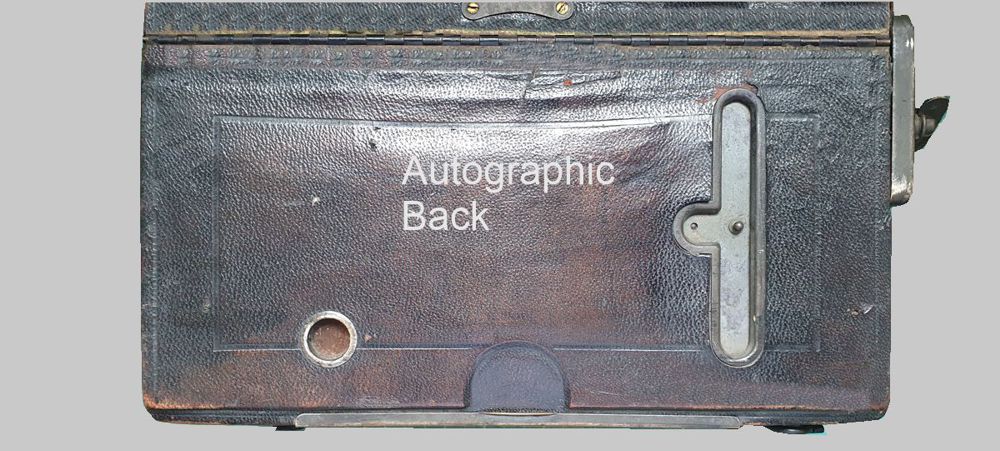
Graflex 3 A back cover is equipped
with the Autographic feature.
This device made it possible to make
notes of the location or event direct on the negative immediately after
the exposure.
An oval shaped device in the back of
the camera was equipped with a sliding mechanism which gave access to
the underlying film cover paper.
A small metal stylus, clamped on top of the camera could be taken out to use as a pencil.
A sort of typewriter carbon transferred the written text on the negative beneath the film cover
paper.
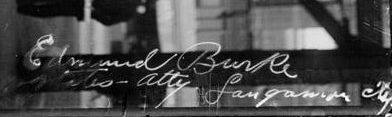
The text was clearly copied and later visible in white on the negative.
See photo below
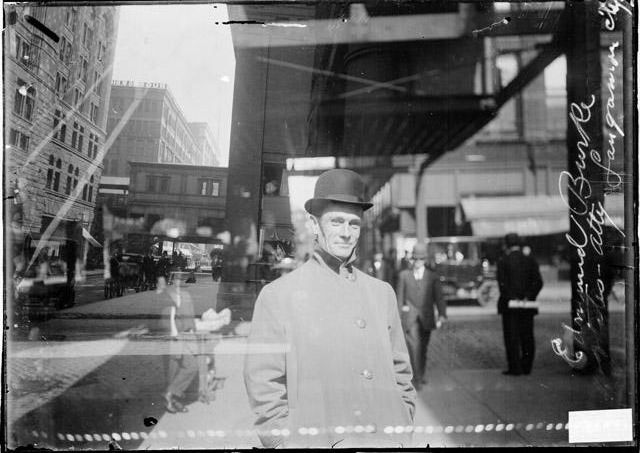
(Chicago History Museum) Glass negative 5x7 Chicago News Inc.
Remarkable photo
The Autographic application visible on a glass negative.
Text visible in writing : "Edmund Burke....Atty Sangamon City"
Location: Underneath a portion of the elevated tracks in the Chicago Loop.
The negative is fainted by a double exposure.
The most common fault in that period of time, made by professionals as well as amateurs, were double exposures.
This one is a significant prove that even profs used to forget exchanging the exposed plate by a new unexposed one.
Chicago Daily News, Inc., photographer.
A Highly Profitable Contract
George Eastman purchased this invention from Henry J. Gaisman, which was a very successful inventor and entrepreneur,
and paid him 300.000 US$ for it. Kodak
added this new invention to all its so called "Autographic" cameras.
From then on all Kodak and Graflex cameras were equipped with this useful
Autographic feature.
Photos � Jo Lommen